
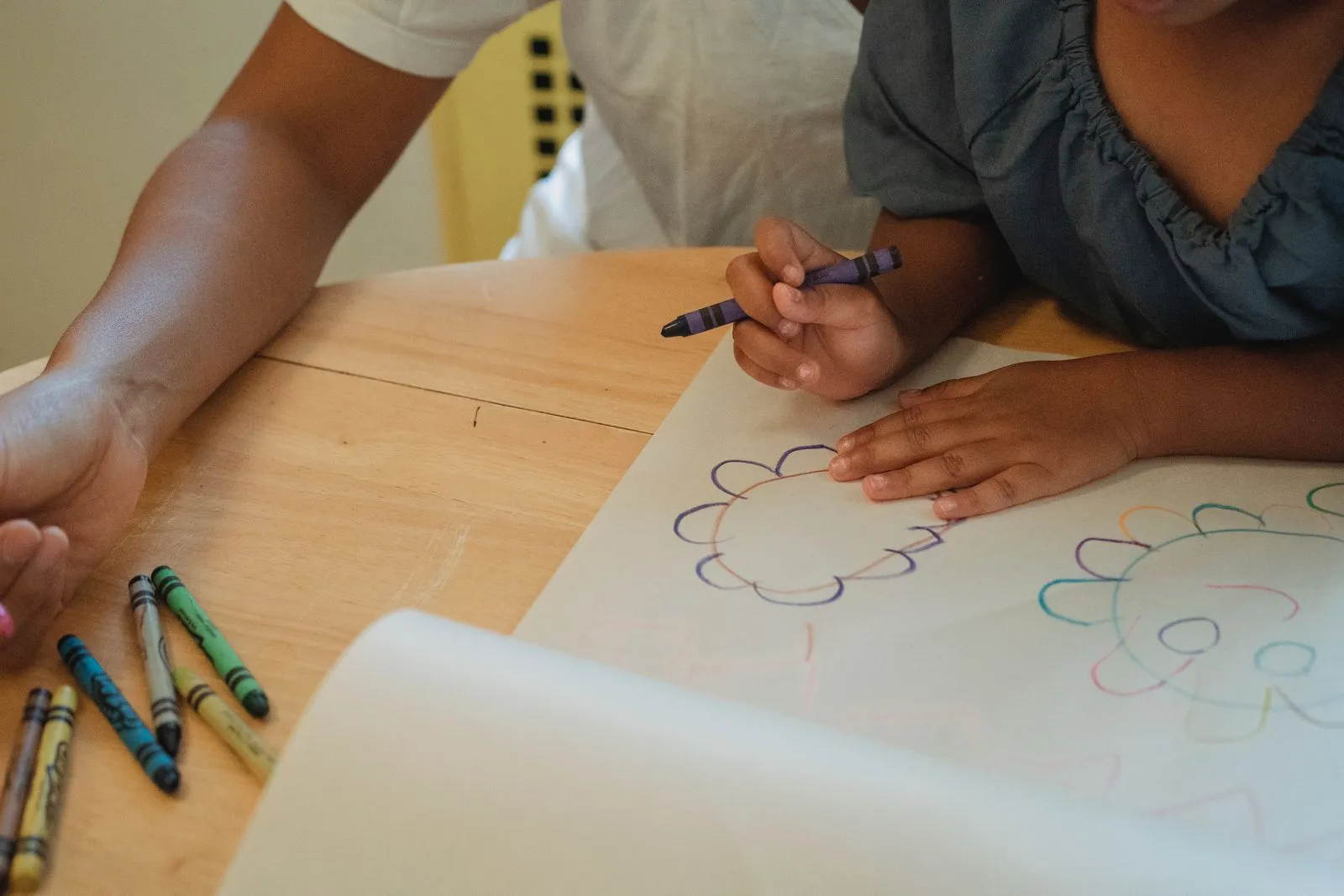
For preschoolers, art is more than making something to take home. It gives them ways to communicate before they have all the words, explore materials, and practice skills through play. A drawing can show an idea, a song can build listening habits, and a simple project can invite children to plan and try again. When adults focus on the process rather than a perfect result, art becomes a welcoming part of early learning.
Art gives ideas a shape
Young children often understand more than they can explain. Drawing and painting let them represent people, places, feelings, and stories in their own way. Ask open questions such as “Tell me about your picture” instead of guessing what it is. This shows interest without judging the result and gives children a chance to practice describing their thinking.
Making choices also supports independence. A child might choose a color, decide where to place a shape, or change a plan midway through a project. These small decisions help children build confidence in their ideas. Keep materials accessible and offer a few options at a time so children can explore without feeling overwhelmed.
Creative work builds early skills
Holding a crayon, tearing paper, pressing clay, and using a brush give children practice with hand control. These activities help develop coordination needed for everyday tasks, including handling utensils and beginning to use classroom tools. Offer materials suited to a child’s age and supervise items that could pose a choking or safety risk.
Art also introduces early learning concepts in a natural way. Children can notice colors, compare shapes, count pieces, and talk about big and small. During a collage, for example, invite a child to sort scraps by color or describe the texture. Keep the conversation playful; the goal is exploration, not a worksheet with one right answer.
Music supports listening and expression
Singing, clapping, and moving to music give preschoolers practice listening for patterns and responding to cues. Repeating a simple song can help children anticipate what comes next, while changing the tempo or volume encourages them to notice sound. Use familiar songs and give children room to join in with words, gestures, or movement.
Music can also offer a comfortable outlet for emotion. A child may tap a rhythm, sway, or sing when talking feels difficult. Invite participation without requiring a solo or performance. When adults model curiosity and enjoyment, children can explore sound at their own pace and learn to respect the different ways classmates express themselves.
Hands-on projects encourage problem-solving
Building and making projects invite children to test ideas. They might discover that a paper shape needs more tape or that a structure stands better with a wider base. Instead of fixing every problem for them, pause and ask, “What could you try next?” This gives children time to observe, make a choice, and learn from the result.
A useful project does not need complicated supplies. Reusable boxes, paper, safe glue, and washable materials can support plenty of exploration. Let children handle manageable parts of the process, from choosing materials to helping clean up. At an arts-focused preschool such as Tulsa Art Sprouts, families can ask how creative activities fit into the daily learning experience.
Art supports preschool learning by giving children meaningful ways to communicate, practice coordination, listen, and solve problems. Offer varied materials, follow a child’s interests, and make room for experimentation rather than focusing on a polished product. To learn how an arts-focused approach may fit your child, contact Tulsa Art Sprouts and ask about its preschool program.